
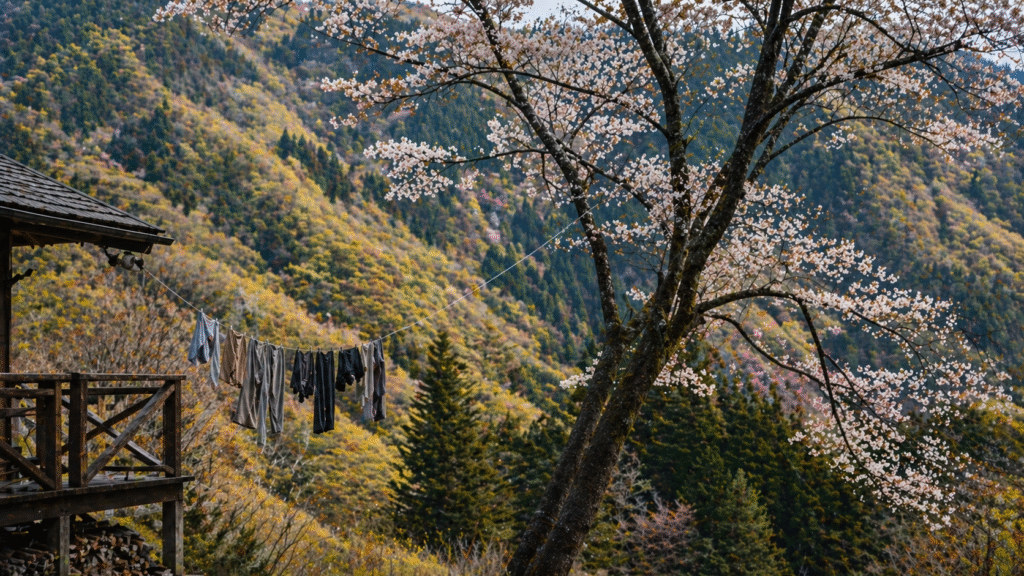
In Tokyo, hanami, cherry blossom viewing, feels increasingly out of sync with the rhythm it once kept. The pale blossoms that used to frame April entrance ceremonies now often peak—and fall—too early, nudged ahead by warmer springs. By contrast, in Shinshu, the yamazakura arrive on their own unhurried schedule, blooming a full month later. These mountain cherries rise taller, looser, and wilder than their city cousins, scattering soft pink across hillsides already alive with the light greens of alder, birch, oak, and maple, set against the steady dark of cedar. From a distance, the mountains seem brushed with color rather than draped in it.
The cultivated cherries around Tokyo can endure for centuries, carefully tended and structurally supported. Yamazakura, by comparison, grow fast and reach skyward—often up to 20 meters—but they do so at a cost. Their wood is weaker, more vulnerable to rot, and their lifespan is shorter. Beauty here feels more fleeting, less managed, and a little more honest.
Around my cabin stand four yamazakura, each with its own presence. The closest has become my “laundry tree.” From the deck, a line stretches upward to a branch perhaps 10 meters high, rigged on a reel that lets me send clothes gliding out into the open air and draw them back again. It’s a small daily ritual, part convenience, part quiet pleasure.
A few years ago, I noticed the blossoms thinning at the crown—a sign of dying branches. This spring, the decline has spread across the top half of the tree. It now leans too close for comfort, its slow unraveling turning into a practical concern. Soon, it will have to come down. And with it goes not just a tree, but a simple system I’d come to rely on. The search for a new way to dry laundry feels, in its own modest way, like an adjustment to loss.